Watching your child struggle is one of the hardest experiences a parent can face. Whether they’re dealing with big emotions, behavioral changes, or the aftermath of a difficult life event, you might feel a mix of worry, confusion, and a deep desire to just make things better.
If you’ve found yourself wondering “what does a child psychologist do?” or how to navigate the many types of therapy for children, please know that you aren’t alone, and seeking help is a profound act of love.
What Can Therapy Help Children With?
Children don’t always have the words to say, “I’m anxious” or “I’m feeling overwhelmed.” Instead, they show us through their actions. Therapy can help children navigate a wide range of challenges, including anxiety, depression, ADHD, trauma, grief, and social difficulties. It provides a safe, gentle space where they can process their world.
Many parents ask, what does a child therapist do exactly? At its heart, a therapist acts as a translator and a guide. They help children understand their internal world and provide them with the tools to manage big feelings, while also supporting you, the parent, in understanding how to best support them at home.
Types of Therapy for Children
Every child is unique, which is why there are several different child counselling techniques designed to meet them where they are developmentally.
Cognitive Behavioural Therapy (CBT)
Cognitive behavioural therapy for children is a practical, goal-oriented approach. It helps kids identify the “tricky thoughts” that lead to difficult feelings and behaviours. By changing these thought patterns, children learn they have power over how they feel.
Research has consistently shown that CBT is highly effective for children and adolescents, with studies demonstrating significant clinical improvement in both mixed child and adolescent samples. A meta-analysis of 48 randomized controlled trials found moderate to large effect sizes for reductions in anxiety symptoms (d = 0.77) from pre- to post-treatment. In some cases, this is adapted into cognitive behavioral play therapy, where these concepts are introduced through games and creative activities.
Dialectical Behaviour Therapy (DBT)
For children who experience very intense emotions or have trouble with “emotional regulation,” DBT can be incredibly helpful. It teaches mindfulness, distress tolerance, and how to navigate relationships more effectively. It’s about finding the balance between accepting who they are and learning the skills to change the things that are causing them pain.
Art Therapy
Sometimes, a box of crayons or a lump of clay can say more than an hour of talking. Art therapy allows children to express complex emotions that they might not yet have the vocabulary for. It’s a non-threatening way to externalize their inner struggles and find a sense of release and mastery.
Parent-Child Psychotherapy Therapy
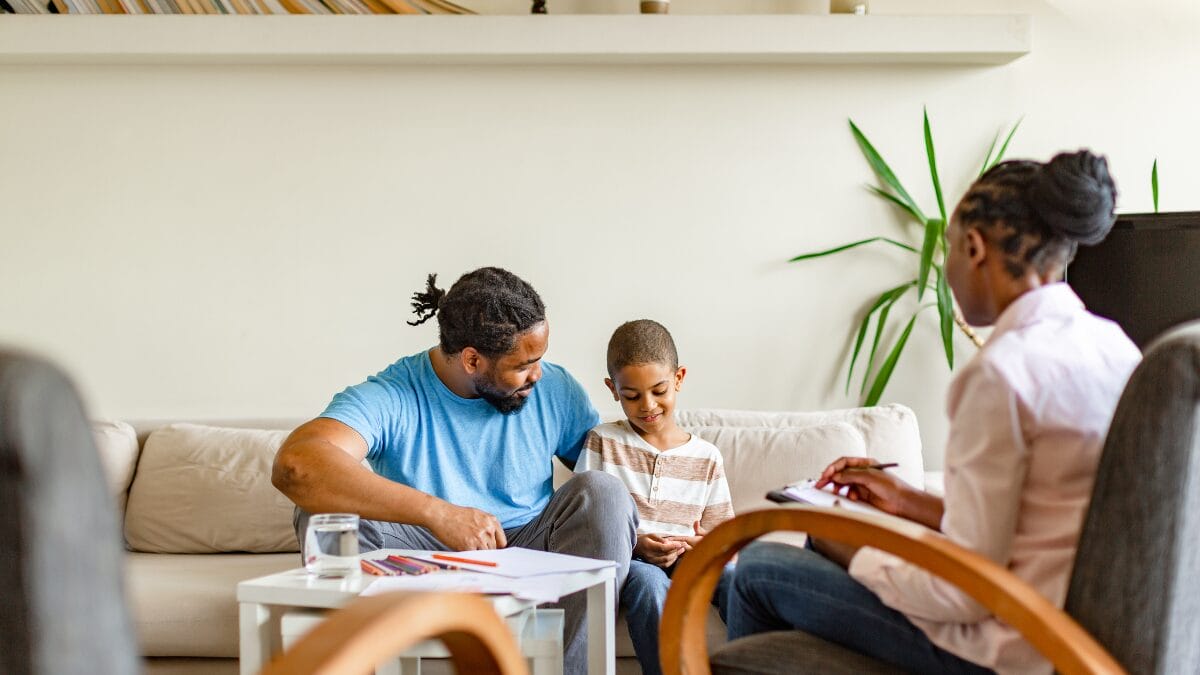
Healing often happens best when the whole family is involved. Parent-child psychotherapy focuses on the “system” rather than just the individual child. Through family therapy activities, such as collaborative drawing or communication games, families learn to resolve conflicts and strengthen their emotional bonds.
Individual vs. Group vs. Parent-Child Therapy
Choosing the right format is just as important as choosing the right modality.
Individual Therapy for Children
This offers one-on-one time where the focus is entirely on your child’s specific needs. It’s a space where they can build a deep bond of trust with their therapist. Depending on their age, this might involve behavioural counseling for children or various types of play therapy, where “play is the child’s language and toys are their words.”
How does play therapy help a child? Research shows that play therapy is remarkably effective. A meta-analysis of 93 controlled outcome studies found that the overall treatment effect for play therapy interventions was 0.80 standard deviations, with particularly strong results when parents were involved in the process. Another meta-analysis of 17 randomized controlled trials found that play therapy was effective in reducing symptoms of anxiety, depression, and behavioural problems in children. It allows them to play out their stressors in a controlled environment, helping them gain a sense of control and resolution.
Group Therapy for Kids
There is something incredibly healing about a child realizing, “I’m not the only one.” Group therapy for kids or family group therapy settings allow children to practice social skills, build empathy, and gain support from peers who are facing similar challenges. It reduces the isolation that often comes with mental health struggles.
Parent-Child Therapy
There are different types of family counselling, including parent-child psychotherapy, which specifically focuses on the relationship between the caregiver and the child. In CBT family therapy, the focus is on how the family’s collective thoughts and behaviours influence one another. The goal is always to create a more harmonious and supportive home environment.
Finding the Right Therapist for Your Child
The most important factor in successful therapy isn’t just the technique—it’s the relationship. Your child needs to feel safe, seen, and understood. When looking for a therapist, don’t be afraid to ask about their experience with specific types of therapy for children or how they involve parents in the process.
At Bhatia Psychology Group, we believe in a warm, collaborative approach. We are here to walk alongside you and your child, providing the clinical expertise and the compassionate heart needed to help your family thrive again. You’ve already taken the first step by being here.
Ready to support your child’s journey? If you’re looking for specialized care, our team is here to help you find the right fit.